

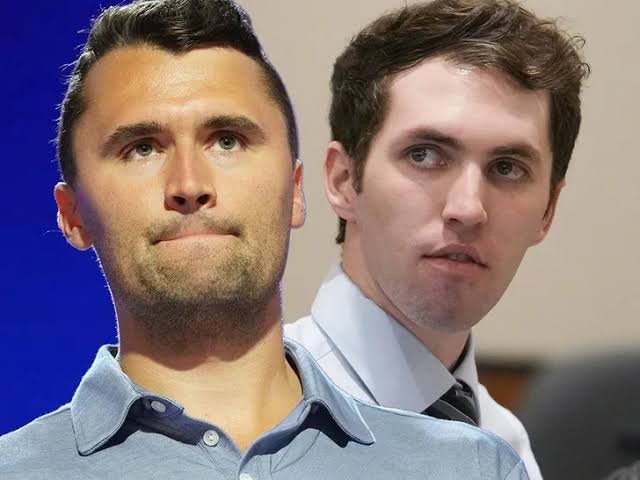
The phrase Charlie Kirk bullet has become a widely searched topic because of questions surrounding the bullet recovered after conservative activist Charlie Kirk was fatally shot at Utah Valley University in September 2025. The case has since generated extensive public discussion about the weapon, forensic evidence, the alleged political motive, and competing claims circulating online. In August 2026, prosecutors pointed to an inscription on a bullet as evidence that Kirk may have been targeted because of his political views.
At the same time, some online discussions have focused on whether forensic testing conclusively connected the recovered bullet fragment to the rifle investigators say was used in the attack. That distinction is important because a bullet fragment, a spent cartridge casing, and the firearm itself are different pieces of evidence. This article explains what has been publicly reported about the bullet, what prosecutors have argued, what forensic testing has established, and why some claims circulating online remain disputed.
What Happened to Charlie Kirk?
Charlie Kirk was the founder and co-founder of major conservative political organizations and became a prominent figure in American conservative politics. He was fatally shot on September 10, 2025, while speaking at a Turning Point USA event at Utah Valley University in Utah. The event had a large audience, with prosecutors later arguing that the shooting also endangered people nearby.
Kirk’s death immediately became a major national story. Authorities identified Tyler James Robinson as the accused shooter, and Robinson later faced aggravated murder and other charges.
The case has continued into 2026, with prosecutors seeking a capital murder conviction and the possibility of the death penalty. Robinson has pleaded not guilty, while his defense has challenged several aspects of the prosecution’s case.
Because the shooting happened in a highly political environment, evidence concerning the weapon and ammunition has received considerable attention.
What Is Known About the Bullet?
One of the most discussed pieces of evidence is a bullet associated with the rifle investigators recovered in connection with the case.
Prosecutors have argued that an inscription found on a bullet contained a political message. According to court reporting, the inscription referenced Kirk’s political views and was presented as evidence that the killing was politically motivated.
The significance of that evidence goes beyond the physical bullet itself. Prosecutors are attempting to establish why Kirk was allegedly targeted and whether the circumstances satisfy aggravating factors required for the death penalty.
However, it is important to distinguish prosecutors’ allegations from facts that have been finally established at trial. Robinson has pleaded not guilty, and the defense disputes aspects of the prosecution’s interpretation of the evidence.
The Engraved Bullet and Political Motive
The engraving has attracted particular attention because prosecutors say it supports their argument that Kirk was targeted because of his political positions.
Court filings reported in August 2026 described the inscription as an overt political reference. Prosecutors also cited other alleged evidence, including messages attributed to Robinson, to support their argument concerning motive.
Why does motive matter?
In a criminal case, establishing motive can help prosecutors explain why an alleged defendant would commit a particular act. In this case, prosecutors have connected the alleged political message on the ammunition with their broader argument about Robinson’s attitude toward Kirk.
The defense has challenged the strength of the evidence concerning political motivation. Therefore, readers should be cautious about treating the prosecution’s interpretation as a final judicial finding.
Was the Bullet Matched to the Rifle?
This is one of the most important questions surrounding the case.
Public reporting has distinguished between forensic findings involving the bullet fragment and the spent cartridge casing. According to PolitiFact’s review of the available evidence, ATF testing did not conclusively match a bullet fragment to the suspected murder weapon. However, testing did confirm a match involving the spent casing and the rifle.
That distinction has caused confusion online.
A firearm normally leaves different types of evidence:
- The projectile travels toward the target.
- The cartridge casing is left behind after the firearm cycles.
- Bullet fragments may be recovered separately if the projectile breaks apart or is damaged.
- The firearm itself can provide additional forensic evidence.
An inconclusive comparison involving a bullet fragment does not automatically establish that the rifle was not used. It simply means that the particular forensic test did not produce a conclusive match between that fragment and the firearm.
Why an Inconclusive Bullet Test Does Not Automatically Change the Case
Forensic evidence is rarely as simple as saying a test is either “matched” or “did not match.”
The condition of recovered ammunition can affect testing. A projectile may be fragmented, damaged, deformed, or otherwise unsuitable for a definitive comparison.
In the Charlie Kirk case, reporting on the ATF findings indicates that investigators were unable to conclusively match a recovered bullet fragment to the suspected rifle, while a spent casing was confirmed as matching the firearm.
That means the forensic record contains different levels of certainty for different pieces of evidence.
This is also why social media claims saying that an “inconclusive” bullet result proves an entirely different weapon was used go beyond what the publicly reported forensic evidence establishes.
What Evidence Has Prosecutors Presented?
The bullet and firearm evidence are only part of the prosecution’s case.
According to reporting on the preliminary proceedings, prosecutors have presented or referred to several categories of evidence, including:
- Video evidence concerning the alleged shooting
- A suspected rifle
- A spent cartridge casing
- DNA evidence
- An alleged handwritten note
- Messages attributed to the accused
- Evidence prosecutors say supports a political motive
- Evidence concerning the alleged position of the shooter
The prosecution argues that the evidence is sufficient to move the case toward trial. A Utah judge ruled in September 2026 that prosecutors had presented sufficient evidence for Robinson to stand trial on the capital murder charge. Robinson pleaded not guilty.
The defense continues to dispute elements of the prosecution’s case, meaning the evidence will remain subject to courtroom scrutiny.
What About the “Exploding Microphone” Theory?
The shooting has generated numerous conspiracy theories online, including a claim that Kirk was killed by an explosive device hidden in or near a microphone rather than by a conventional bullet.
There is no established evidence supporting that explanation.
A recent PolitiFact review reported that the Utah medical examiner certified Kirk’s death as resulting from a gunshot wound to the neck and that investigators recovered bullet material. The review also reported that investigators found no evidence of explosive residue or shrapnel consistent with a microphone explosion.
This is an important distinction between documented evidence and internet speculation.
The existence of unanswered questions about individual forensic details does not, by itself, establish an alternative explanation for the shooting.
Why Are People Searching for Charlie Kirk Bullet Details?
Interest in the ammunition evidence has grown for several reasons.
First, the alleged inscription gives the bullet potential significance beyond ordinary forensic analysis. Prosecutors have connected it to their argument about political motive.
Second, online discussions have focused heavily on whether the bullet fragment was conclusively matched to the recovered firearm.
Third, the case has become surrounded by misinformation and conspiracy theories. Fact-checkers have documented false claims about the shooting, including claims that it was staged or that alternative mechanisms caused Kirk’s death.
Finally, the case has major political implications. Kirk was an influential conservative organizer, and his death occurred during a period of intense political polarization in the United States.
What Is the Current Legal Status of the Case?
As of September 2026, the criminal case remains ongoing.
Tyler Robinson has pleaded not guilty to the charges related to Kirk’s killing. A Utah judge determined that prosecutors had presented enough evidence for the case to proceed toward a capital murder trial. The prosecution has argued that the shooting endangered people attending the event and that political targeting could be relevant to aggravating factors.
The defense has challenged the death penalty and disputed aspects of the prosecution’s interpretation of motive and evidence.
Because the trial has not produced a final verdict, descriptions of Robinson as legally responsible for the killing should be framed as allegations rather than established guilt.
How to Evaluate Claims About the Bullet
The Charlie Kirk case demonstrates why readers should be careful when evaluating viral claims about forensic evidence.
A useful approach is to ask five questions:
- What exactly was tested?
A bullet fragment and cartridge casing are not interchangeable pieces of evidence. - What did the forensic report actually conclude?
“Inconclusive” does not necessarily mean “ruled out.” - Who is making the claim?
Prosecutors, defense attorneys, investigators, journalists, and social media commentators may interpret evidence differently. - Has the claim been established in court?
An allegation in a court filing is not the same as a final verdict. - Is the source relying on primary evidence?
Viral posts often remove important context from forensic or legal documents.
These questions can help separate genuine developments from speculation.
Bullet Evidence vs. Cartridge Evidence
The difference between bullet and cartridge evidence deserves special attention because it is frequently misunderstood.
A bullet is the projectile that leaves the firearm. A cartridge casing is the container left behind after the firearm fires and ejects the spent round.
Forensic investigators can examine markings on both. Firearms can leave microscopic patterns on cartridge cases and projectiles, although the quality and usefulness of those markings depend on the condition of the evidence.
In the Kirk case, public reporting has indicated that the ATF was unable to conclusively match a particular bullet fragment to the suspected rifle but did find a match involving the spent casing.
That distinction is central to understanding the forensic discussion without overstating what the evidence proves.
What the Bullet Evidence Does and Does Not Show
Based on publicly reported information, several conclusions can reasonably be separated from speculation.
What the evidence has been reported to show
- Investigators recovered a suspected rifle.
- A spent casing was associated with the firearm evidence.
- A bullet fragment was recovered.
- Prosecutors have pointed to an inscription on ammunition as evidence supporting a political-motive theory.
- Forensic testing reportedly confirmed a relationship between the spent casing and the suspected rifle.
- Testing of the bullet fragment itself was not conclusive.
What remains disputed or unresolved
- The ultimate legal significance of the ammunition evidence
- The defense’s challenges to the prosecution’s interpretation
- The final determination of motive
- Whether all disputed forensic questions will be resolved at trial
The distinction matters because criminal cases are ultimately decided through the legal process, not through viral interpretations of individual pieces of evidence.
Frequently Asked Questions
What happened to the bullet that killed Charlie Kirk?
Charlie Kirk was fatally shot during a Turning Point USA event at Utah Valley University in September 2025. Investigators recovered bullet-related evidence and a suspected rifle. Publicly reported forensic findings distinguish between a bullet fragment that was not conclusively matched to the rifle and a spent casing that was matched to it.
Was the Charlie Kirk bullet engraved?
Prosecutors have said an inscription on a bullet was evidence of a political motive. The alleged inscription was presented in court filings as part of the prosecution’s argument about why Kirk was targeted. Because the criminal case is ongoing, the prosecution’s interpretation should not be treated as a final finding of guilt or motive.
Did the bullet match the rifle?
Public reporting says forensic testing did not conclusively match a recovered bullet fragment to the suspected rifle. However, testing reportedly confirmed a match involving a spent cartridge casing. Therefore, saying simply that “the bullet did not match” leaves out an important part of the forensic evidence.
Was Charlie Kirk killed by an exploding microphone?
There is no established evidence that an exploding microphone caused Kirk’s death. A fact-checking review reported that the medical examiner certified a gunshot wound as the cause of death and that investigators found no evidence of explosive residue or shrapnel consistent with such a theory.
Who is accused of killing Charlie Kirk?
Tyler James Robinson is the defendant accused in the case. He has pleaded not guilty, and a Utah judge ruled that the prosecution presented enough evidence for the case to proceed toward a capital murder trial. The final determination of guilt will be made through the legal process.
Why is the bullet important in the Charlie Kirk case?
The ammunition evidence matters because prosecutors have connected an alleged inscription to their argument about political motive, while forensic testing has also become a subject of public debate. Understanding the difference between the bullet fragment and the spent casing is essential when evaluating claims about the case. The broader evidence will ultimately be assessed through the court proceedings.
Conclusion
The discussion surrounding the Charlie Kirk shooting bullet combines genuine forensic questions, courtroom allegations, and a large amount of online speculation. The publicly reported evidence indicates that investigators recovered a suspected rifle, cartridge evidence, and bullet fragments, while prosecutors have highlighted an alleged inscription as part of their political-motive argument. At the same time, forensic testing of a bullet fragment was reportedly inconclusive, whereas testing of a spent casing connected it to the suspected firearm.
The most reliable way to understand the case is to separate confirmed findings from allegations and internet theories. As the legal proceedings continue, additional evidence and courtroom testimony may clarify disputed aspects of the shooting. Readers following the case should focus on verified court developments rather than viral claims that present unresolved questions as established facts.
